
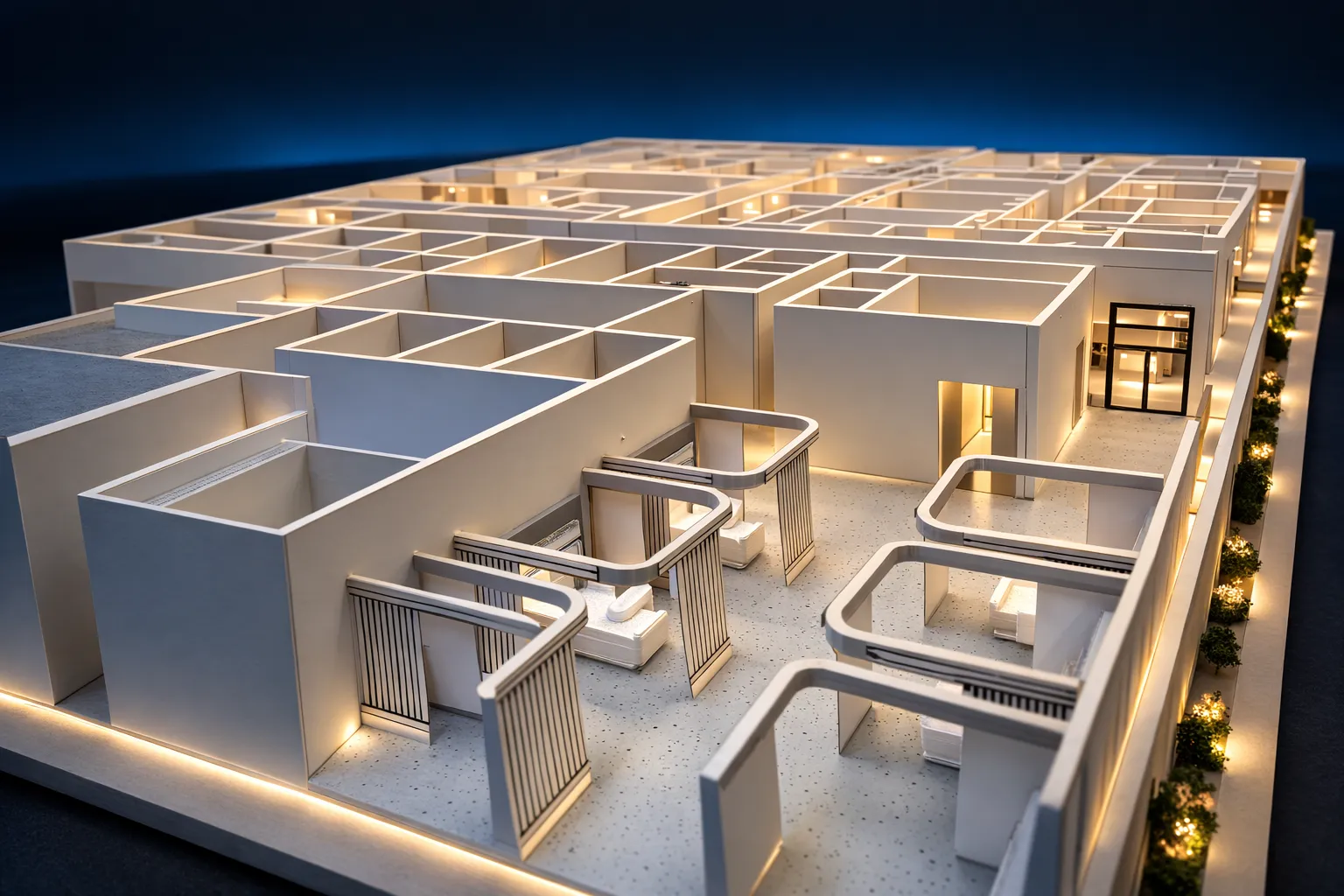
A City-Scale Perspective on Design, Engineering, and Hybrid Visualization
In architectural practice and modern construction delivery, visual models are far more than aesthetic tools — they are strategic instruments for communication, engineering precision, and collaborative decision-making across disciplines.
At City Scale, we see visual models as a bridge between physical perception and digital intelligence, enabling stakeholders to feel, analyze, and interact with a design before it ever reaches the construction site. This hybrid approach adds measurable value to design workflows and project outcomes.
Physical Models: The Tangible Narrative
Physical scale models deliver clarity in ways screens alone cannot. A carefully crafted model allows viewers to:
- Grasp massing, proportions, and spatial sequencing
- Understand urban context and site relationships
- Engage with design through tactile interaction
- Present complex developments with confidence
A strong example from our portfolio is the Central Business District (CBD) Towers model — a commercial-scale project that illustrates mixed-use urban integration at the city level. This model helps stakeholders understand how vertical urban spaces interact across context, movement flows, and environmental corridors.
Physical models like these function not only as visual communication tools, but also as conversation frameworks between architects, engineers, urban planners, and investors.
Digital Models: Data-Driven Clarity
On the digital side, advanced tools like BIM (Building Information Modeling) capture multidisciplinary data — from structure to MEP coordination, from clash detection to cost estimation — in a single integrated environment.
Digital modeling allows teams to:
- Test structural performance
- Run energy and sunlight simulations
- Validate infrastructure systems
- Produce variations rapidly for stakeholder feedback
By anchoring digital intelligence into the design process, City Scale ensures that every iteration tested virtually can inform a more precise physical outcome.
Bridging the Gap: Hybrid Integration
The true innovation lies in integrating both physical and digital systems. At City Scale, this hybrid workflow follows several key strategies:
1. Digital-to-Physical Synchronization
Digital models (BIM, CAD) feed directly into fabrication workflows. This ensures physical models accurately represent engineering data, reinforcing design intent and integrity.
2. Augmented Models
By integrating AR projections or QR-linked digital layers, viewers can explore live data overlaid on a physical model — uncovering metrics like circulation patterns, sunlight exposure, or functional zones without disrupting the model’s spatial logic.
3. Interactive Presentation Platforms
Models like the Zahwa Scale Model and Vienna Project compounds provide physical visualization that pairs with digital walkthroughs and interactive renderings, offering dynamic experiences to investors and urban authorities.
Benefits for Engineering and Stakeholder Experience
Hybrid modeling delivers tangible benefits:
- Improved coordination between architects and engineers
- Enhanced investor confidence through immersive clarity
- Reduced revision cycles via synchronized feedback loops
- Faster approvals based on comprehensive visual communication
For multidisciplinary teams operating in commercial, residential, or urban-scale sectors, hybrid visualization becomes a project accelerator, not just a presentation aid.
The Road Ahead
As smart city strategies and digital ecosystems become more embedded in construction, the integration of physical and digital visual models will continue to shape tomorrow’s built environment.
City Scale stands at this intersection — with craftsmanship that anchors design in reality and digital intelligence that elevates accuracy and foresight.
The future of architectural visualization is not physical or digital…
It is physical and digital, seamlessly integrated.